About Elise Naramore

I have spent 35 years in the physics classroom, and for most of that time, I had the same nagging feeling that grading was getting in the way of learning. Not the learning of the students I was most worried about — the ones whose brilliance didn’t show up in percentages — but my own understanding of who they actually were and what they could actually do.

That frustration is what led me to develop the Learning Progression Model.

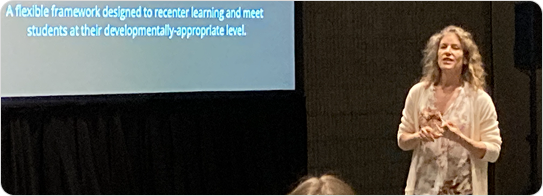
LPM replaces ranking with developmental pathways: structured, evidence-based progressions that define what growth actually looks like in a discipline, written in language students can use themselves. Rather than sorting students by performance at a single moment in time, LPM documents how they develop over time — and gives teachers, students, and families a shared language for that growth.

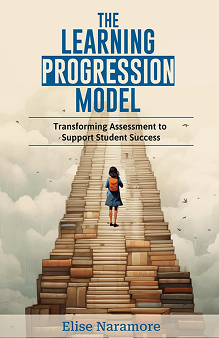
I am the Director of ReimaginedSchools and the author of The Learning Progression Model: Transforming Assessment to Support Student Success (2024) and co-author of Going Gradeless (2021). My work has taken me from my own classroom in New Jersey to whole-school implementation with a K–12 community in Kazakhstan, where I have supported more than 100 teachers across three languages of instruction in building assessment infrastructure that works for every learner.

I am currently completing doctoral course work in Teachers, Schools and Society at the University of Florida. I will be working on my dissertation, with research focused on grading reform, care-centered assessment, and the conditions that make competency-based education actually sustainable in practice — not just visionary on paper.

I will be retiring from classroom teaching in June 2026 after 35 years. I will be consulting with schools and systems ready to do the harder, more important work: building the assessment infrastructure that makes their visions for student-centered learning real.

125+

Enrolled Student

50+

Completed Courses

2+

Course Instructor

100%

Success Rate

Content

Podcast:

From Earning to Learning

Guest Appearances

Recommended reading and viewing

What We’re All About

We want to foster creativity, growth, and individuality. While there are many ways to do this, we have developed a method that is easy to implement and universally applicable. The Learning Progression Model is an approach to teaching and learning that de-emphasizes the role of grades, provides access to learners of all abilities, and shifts the focus back to the acquisition of knowledge and transferable skills. This is accomplished through a research-backed, strengths-based approach that is designed to identify and communicate concrete and measurable progress towards these goals.

Our Journey

32 years ago
When I began teaching 32 years ago, I was, like all other new teachers, merely mimicking what I had experienced. It worked, but it didn’t feel right. I felt like some students got left out, I was doing more work than the students, and they were just playing at school to get to the next square on the game board. As I encountered various mentors, got my graduate degree in Curriculum and Instruction, and gained experience both as a teacher and as a mother, I got better at engaging teenagers. Every new thing I encountered (cooperative learning, inquiry method, PBL), you name it… I tried it. At every conference that I went to, I sought the answer to my persistent question: “Will this be the magic bullet that would make all students entering my class have brains like sponges, eager for connection, and invested in their own learning?” Time and time again, I harvested useful strategies and applied them in my classroom, but none proved to be the solution that I was looking for.
Then, about 7 years ago, I was sitting in our office, discussing our mutual frustration about the endless talk of grades, the constant “How do I get an A?” from students and parents alike. It was always US doing stuff TO the students. We talked every day for months. He came up with a plan closely related to Standards-Based Grading and started playing with it in his classes. I tried a modified version in my classes the next semester, seeing interesting results.
This was also around the time when NGSS was being rolled out more formally and universally. I integrated the Science and Engineering Practices and Disciplinary Core Ideas into my new assessment scheme. Over the next few years, we rejiggered, revised, overhauled, and tweaked the approach. And saw amazing transformations. All of this is described in the book we later published in 2021, called “Going Gradeless”. We developed The Learning Progression Model (LPM) with the intention of creating a more supportive learning environment for all students. Guiding students through the development of specific skills, teachers use a flexible and systemized framework across all content areas and course levels. While de-emphasizing traditional letter and number grades (or to eliminate them completely), we developed a model that supports strengths-based, descriptive feedback, shifting the focus of student learning from results to process.

About The Founders

We are classroom teachers who live and work in New Jersey. We want to share our vision and expertise with our global colleagues, working from within the system to initiate reform of our antiquated models of education. 
We are not consultants or administrators. We are in classrooms every day, implementing our current model and addressing current challenges.
We have a plethora of resources, including professional development courses, podcasts, blogs, and recommendations. We would like you to dig around, see what’s useful, and get in conversation with us on social media. Teachers get better only with support and time, just like our students!

Have you heard?

Scroll to Top